
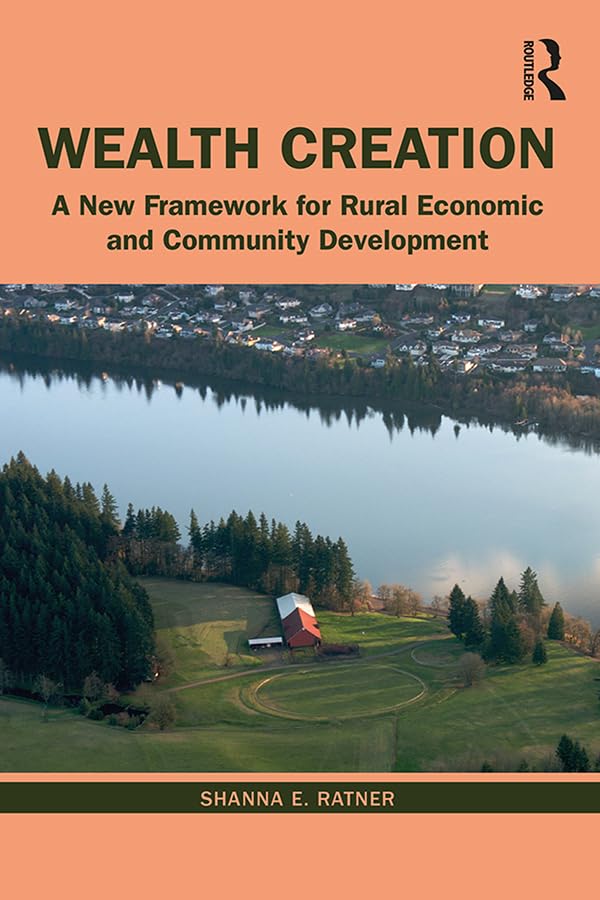
Wealth creation : a new framework for rural economic and community development / Shanna E. Ratner.
Material type: TextPublication details: London& New York : Routledge ; 2020.Description: xi, 162 pages : illustrations ; 24 cmISBN:
 - 9780367257392
- 0367257394
- 9780367257422
- 0367257424
- HN49 .R38 2020
| Cover image | Item type | Current library | Home library | Collection | Shelving location | Call number | Materials specified | Vol info | URL | Copy number | Status | Notes | Date due | Barcode | Item holds | Item hold queue priority | Course reserves | |
|---|---|---|---|---|---|---|---|---|---|---|---|---|---|---|---|---|---|---|
 Books
Books
|
African Court on Human and Peoples' Rights Library | HN49 .R38 2020 (Browse shelf(Opens below)) | Available | 10037241 |
Includes bibliographical references and index.
Introduction -- What is wealth? -- What is a wealth creation value chain? -- How do ownership and control change the game? -- What does it mean to be demand-driven? -- How do we connect with investors? -- Where does technology fit into wealth creation value chains? -- Rethinking measures of economic impact -- The critical roles of wealth creation value chain coordinators and coaches -- Taking a wealth creation approach to scale -- Index.
"A new approach to rural development is emerging. Instead of being about attracting companies that might create jobs over which communities have no control, the emerging paradigm is about connecting the unique underutilized assets of place with market opportunity to grow assets that are owned and controlled by and for the benefit of low-wealth people and places. But asset development is about more than bricks and mortar or narrowly defined financial assets. There are many kinds of assets that communities require to thrive - such as social capital, natural capital, political capital, and intellectual capital. The emerging new approach to rural development is, then about broadening the definition of "wealth," engaging underutilized assets, and a key third element: harnessing the power of the market - rather than relying solely on philanthropy and government. Wealth Creation provides a conceptual guide with practical examples for policymakers, practitioners of economic and community development, community organizers, environmentalists, funders, investors, and corporations seeking a values-based framework for identifying self-interests across sectors that can lead to opportunities to transform existing systems for the collective good"--
There are no comments on this title.